Buyer's guide
Container grades, explained properly
Cargo Worthy, Wind & Water Tight, As-Is and One-Trip are the four descriptions you will meet when buying a used shipping container. They describe real, different physical conditions — but they are applied loosely across the market, and the difference between two of them can be the difference between a container that ships and a container that sits. This page is what each one actually means.
The short version
| Grade | Condition | Ships internationally? | Typical use |
|---|---|---|---|
| One-Trip | Effectively new. One loaded voyage from the factory. | Yes | Conversions, retail, anything where appearance matters |
| Cargo Worthy | Structurally sound, surveyed, valid CSC plate. Cosmetic wear expected. | Yes | One-way shipping, export, long-term outdoor storage |
| Wind & Water Tight | Dry inside, sound roof and seals. Structure not certified for sea. | No | Static storage, site huts, workshops, most conversions |
| As-Is | Sold with named defects. May leak, may need repair. | No | Scrap, parts, non-weather-critical storage, repair projects |
One caveat before the detail: these are trade conventions, not a legal standard. Only the CSC plate is externally governed. Everything else depends on who is doing the grading, which is why the sections below describe the physical condition rather than trusting the label.
Cargo Worthy (CW)
Cargo Worthy is the grade that means a container is still a shipping container. It has been surveyed and found structurally sound enough to be loaded with cargo and put on a ship, which is a materially higher bar than simply being dry.
What it means physically
- Structural integrity. Corner castings, corner posts, rails and the underside cross-members are sound and undeformed. These carry the load when the container is stacked and lashed; a compromised corner post is what turns a dent into a rejection.
- Doors that seal and swing. Both doors open and close through their full arc, the locking bars and cams operate, and the gaskets seal along their whole length.
- A sound floor. The plywood or bamboo floor is intact, fixed down, not delaminated and not soft. Cargo Worthy generally allows minor floor repairs but not a floor that flexes.
- No holes, anywhere. Surface rust and pitting are normal. Perforation is not.
- A valid CSC plate. See the CSC section below — for international carriage this is not optional.
- Cosmetic wear is expected. Dents in the side panels, patch repairs, several layers of overpainted liner colours, rust streaking. A Cargo Worthy container is a working container, not a tidy one.
What it is suitable for
Anything that involves the container moving with cargo inside it: one-way shipping, export loads, and repositioning. It is also the safe choice for long-term outdoor storage in a harsh climate, because the same qualities that let it survive a sea voyage let it survive a decade in a field.
What to watch out for
- "Cargo Worthy" without a survey. The grade is meaningful only if someone competent inspected the unit and will put that in writing. Ask when it was surveyed and by whom.
- An expired CSC examination. A plate can be present and out of date. A container with a lapsed examination is not shippable until it is re-examined, and that cost lands on you.
- Floor contamination. Older floors were treated with pesticides, and spilled cargo soaks in. If the container is going to hold food, animal feed or anything you will be inside for long periods, ask about the floor's history.
- Repairs hiding structural damage. A large, recent patch on a corner post area is worth a photograph and a question.
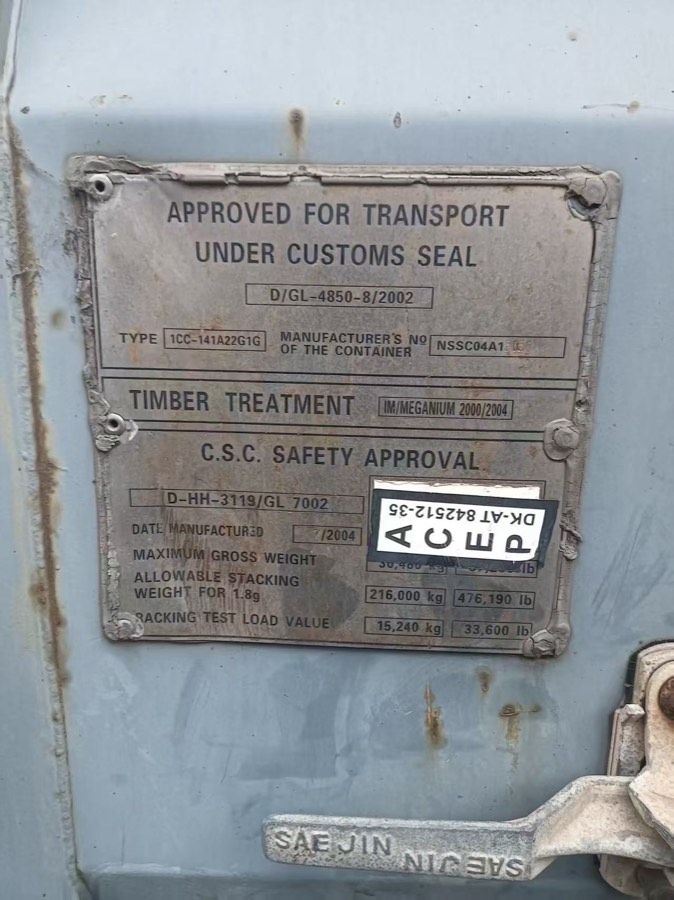
The CSC plate, and why it decides the grade
The Convention for Safe Containers is an international agreement that requires every container used in international transport to carry a safety approval plate — usually riveted to the left-hand door — and to be re-examined periodically. The plate records the approval reference, the date of manufacture, the maximum gross weight, the allowable stacking weight and the racking test load.
Two things follow from this that buyers routinely get caught by.
First, the plate is the difference between Cargo Worthy and everything below it. A container can be in beautiful condition and still not be shippable if its examination has lapsed. Conversely, a battered unit with a current plate and a clean survey can legally be loaded and sailed.
Second, the plate does not follow the container automatically. Once a unit leaves the shipping fleet and is sold for static use, nobody has an interest in keeping the examination current. Most containers sold into storage stop being Cargo Worthy at that point, whatever their physical condition. If you might ever want to ship the unit, buy it Cargo Worthy now rather than assume you can re-certify it later.
If you are only ever going to stand the container on a hardstand and put things in it, none of this matters and you should not pay for it.
Wind & Water Tight (WWT)
Wind & Water Tight is the storage grade. It promises exactly what its name says and nothing beyond it: the inside stays dry.
What it means physically
- No light visible from inside. The standard test is to close the doors and stand inside. Any pinhole shows as a point of daylight, and a WWT container should show none.
- A sound roof. The roof panel takes the worst of the weather and is where rust perforates first. It should have no holes and no ponding dents deep enough to hold standing water.
- Door seals that actually seal. Gaskets intact and compressing, doors closing square.
- A dry, solid floor. Intact enough to walk and load on, without soft spots.
- Structure not certified. The corner posts and rails may be perfectly serviceable, but nobody has surveyed them to a shipping standard, and the CSC examination is usually lapsed.
What it is suitable for
Static storage of almost anything, site offices and welfare units, workshops, agricultural storage, and the majority of container conversions — where the structure is going to be cut into and reinforced anyway, so a shipping certification you are about to invalidate is wasted money.
What to watch out for
- WWT sold as Cargo Worthy. This is the single most common misrepresentation in the market, because the two look identical from the outside. The tell is documentation: ask for the survey and the CSC examination date.
- Roof condition that is not photographed. It is the most failure-prone panel and the one nobody photographs, because it needs a ladder. Insist on it.
- Repairs done with sealant. A pinhole filled with mastic will pass a light test this month and leak next winter. Ask whether repairs were welded or filled.
- "Wind and water tight" used as a synonym for "fine". Some sellers use it loosely to mean the container is not obviously broken. Make them commit to the light test.
As-Is
As-Is is not a condition, it is a disclosure. It means the seller is naming the defects and selling the unit with them, with no warranty that it is dry, sound, or usable for any particular purpose.
What it means physically
Anything, and that is the point. In practice an As-Is unit usually has one or more of: roof perforation, floor damage or a missing section of floor, doors that do not close square or at all, significant panel corrosion, or damage from a previous impact. A reputable seller will list which of these apply.
What it is suitable for
- Storage where the contents will not be harmed by damp — aggregates, salvage, scrap, tooling that is already outdoors.
- Repair projects, if you have the welding capacity and the replacement panels are worth less than the discount.
- Parts: doors, locking gear, corner castings and floor sections all have onward value.
- Cutting for material, where the steel itself is the purchase.
What to watch out for
- Undisclosed As-Is. If a unit is offered with no grade at all, treat it as As-Is until proven otherwise.
- Repair cost exceeding the saving. A roof replacement or a floor section can easily cost more than the gap between an As-Is and a WWT unit. Get the defect list before you compare.
- It still has to be moved. Transport costs the same whatever the grade, and a badly damaged unit may not be liftable by spreader — which changes the handling equipment required at both ends.
- Doors are the expensive failure. A container that will not close is much harder to make useful than one with a hole in a wall.
One-Trip (and "new")
A One-Trip container was built at the factory, loaded once with cargo for the voyage out of the manufacturing region, and sold at the destination. It is the closest thing to new available on the used market, and the term is more honest than "new" — a container that has crossed an ocean once is not new, and a seller who calls it new is rounding in their own favour.
What it means physically
- Original paint, original floor, original seals. Typically a single small scuff or two from lashing and handling, and nothing else.
- Current CSC plate with years left before its first re-examination.
- Usually high cube. Most new production is 40ft high cube, so a One-Trip 20ft standard is less common and less widely stocked.
- Choice of colour is sometimes possible, because these units have not yet been through a leasing fleet's repaint cycle.
What it is suitable for
Anything where the container will be seen or lived around: retail and hospitality builds, offices, homes and habitable conversions, and any project where you are adding a lot of value and do not want the base unit to be the weak part. It is also the right choice when you need certainty of condition and cannot inspect in person.
What to watch out for
- "New build" that is not One-Trip. Ask directly whether the unit has been in service. A container that has done three years of leasing and then been repainted is not One-Trip, however good it looks.
- Floor treatment. New floors are treated for timber import regulations. If the container is for habitation, ask what was used and consider overlaying the floor.
- Availability is regional. One-Trip stock exists where new containers arrive, so it is plentiful at major import ports and scarce inland. That shows up as transport cost, not unit cost.
- Paying for a certification you will destroy. If the first thing you will do is cut three window openings, much of what you paid for is about to be removed. WWT may serve you better.
Choosing between them
The decision is usually settled by two questions.
- Will the container ever move with cargo in it? If yes, you need Cargo Worthy or One-Trip, and you need the CSC examination to be current. Nothing below that is legal for international carriage.
- Does the inside need to stay dry? If yes, WWT is the floor of what is acceptable. If no, As-Is may be the right economic answer.
Everything after that is appearance and budget. If the container will be looked at by customers or lived in, One-Trip is worth the difference. If it will stand behind a workshop holding steel stock, it is not.
Before you commit: the short checklist
- Photographs of the actual unit, dated within the last few weeks — all four sides, the roof, the interior with the doors closed, the floor, and the CSC plate.
- A written condition note listing known defects, not just a grade word.
- The CSC examination date, if the unit needs to ship.
- Confirmation of who lifts it and onto what at the depot, and what the receiving end needs.
- A quote that itemises the unit, the delivery leg and any depot handling separately, so nothing appears later.
Every quote we issue includes all five, because the answers are the actual product. How we vet the depots that supply them.
Not sure which grade you need?
Tell us what the container is for and where it is going. We will tell you the lowest grade that will do the job, not the highest one we can sell.
Request a quote